

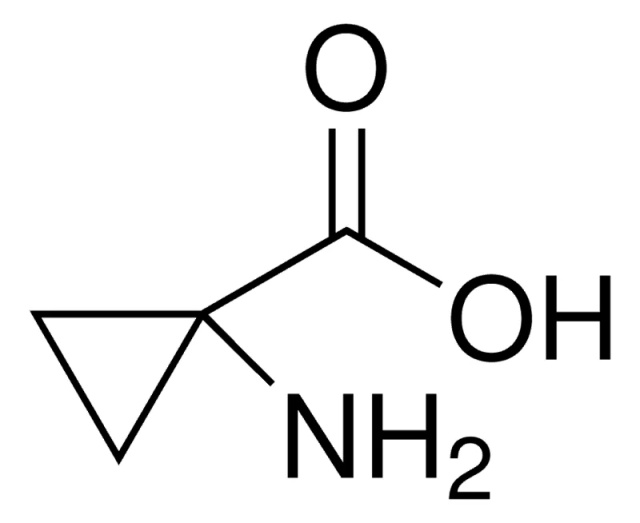
ACC (1)
Common Name: 1-Amino-cyclopropane-1-carboxylic acid
Molecular Formula: C4H7NO2
CAS: 22059-21-8
Structural Formula:
Molecular Weight: 101.10
Melting Point: 229–231°C
Assay: 98%
pH Value: neutral at pH 6.8 (isoelectric point)
Physical Properties: White needle-like crystals, easily soluble in water; sparingly soluble in methanol, ethanol, and acetone. slightly sweet.

The R&D Journey of ACC
In 1922, 1-amino-cyclopropane-1-carboxylic acid (ACC) was first synthesized by Ingold et al., though it was not subjected to further study at the time.
In 1955, Vahatalo and Virtanen isolated ACC from lingonberries for the first time.
In 1957, Burroughs discovered the presence of ACC in apples and pears.
In 1979, the Chinese-American scientist Shang-Fa Yang and his colleagues discovered that 1-amino-cyclopropane-1-carboxylic acid (ACC) is the direct precursor in ethylene biosynthesis. It was subsequently confirmed that ethylene synthesis involves a methionine metabolic cycle, which was later named the "Yang Cycle."


